Mazovia: Unobvious. Dunes, Wild Rivers, and Wooden Villas Hidden in Pines
Thinking "Mazovia", do you see Warsaw? It's time to change that. Discover the Kampinos Forest, Świdermajer architecture, and a land where rivers still flow to their natural rhythm.
Kacper
January 20, 2026
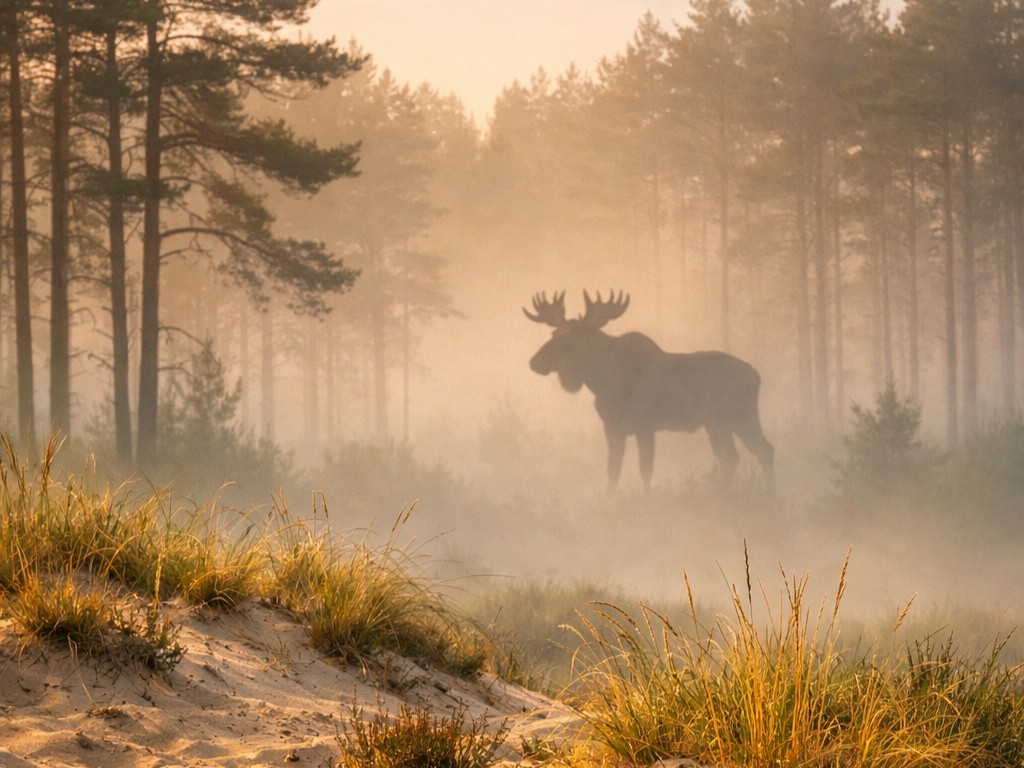
Mazovia (Mazowieckie) is a region of paradoxes. We have the most modern metropolis in Poland here, and just an hour away from it – some of the wildest areas in Europe. For many, it's just a flat land passed by train. For us, it's a place full of hidden treasures.
It is here that you will find inland dunes, unique wooden architecture, and orchards that feed half of Europe. We take you on a journey through Mazovia at your own pace, away from the hustle and bustle of the capital.
1. Kampinos: Desert and Swamp in One
Kampinos National Park is a global phenomenon. It is the only national park located so close to a state capital, but after crossing its borders, you forget about civilization.
- Contrasts: It is a mosaic of two worlds – dunes (some of the best preserved in Europe) and swamps. Walking the trail through these areas is a constant change of landscape.
- Kingdom of the Moose: Kampinos is home to the moose. Meeting this majestic animal in the morning, in the mist, on one of the sandy roads, is an almost mystical experience.
2. Świdermajer: Pine Microclimate
East of Warsaw, along the "Otwock line", hides an architectural pearl – the Nadświder style, commonly called "Świdermajer". These are wooden villas from the turn of the 19th and 20th centuries, inspired by the Alpine style, but with a local touch. Openwork verandas, decorated porches, and tall pines create a specific microclimate here, which has attracted health resort visitors for years. A walk through the streets of Otwock or Józefów is a journey back in time to the belle époque.
3. Liwiec and Bug: The Last Rivers of Their Kind
The Bug is the last such large river in Europe that has not been regulated by man. It flows as it pleases – creating bends, islands, and sandy banks.
- Kayaking on the Liwiec: A tributary of the Bug, the Liwiec River, is an ideal option for beginners and families. It is shallow, warm, and picturesque. The view from Sowia Góra of the meandering river is one of the most beautiful lowland landscapes in Poland.
- Podlasie Bug Gorge: Here the river shows its power. These are ideal areas for ornithologists and those looking for absolute silence by the water.
4. Kurpie: Land Flowing with Honey
The north of Mazovia is Kurpie – a region with an extremely strong cultural identity. Here, the forest (Green Forest) has always been a home and a way of life. Kurpie is famous for beekeeping (traditional honey gathering from wild bees) and amber, which used to be mined here. It is worth visiting the Open-Air Museum in Nowogród to see how the "forest people" lived and try fafernuchy – traditional cookies made of carrots and pepper.
5. Czersk and Urzecze: Vistula Identity
South of Warsaw, right on the Vistula, lies the castle in Czersk. These Gothic ruins are the former seat of the Mazovian dukes. From the towers, there is a view of the Vistula ice-marginal valley and orchards. But it is also the area of Urzecze – a forgotten ethnographic micro-region associated with rafters and Olęder settlement. It is here that you can best feel the spirit of the "queen of Polish rivers", which has shaped the lives of inhabitants for centuries.
6. Flavors of Mazovia: Apples and Cider
Mazovia is the largest orchard in Europe. The areas of Grójec and Warka are famous for apples, which have ideal conditions here (specific microclimate).
- Cider: The cider tradition is being revived. True, artisanal cider from Mazovian apples is dry, refreshing, and has nothing to do with sweet drinks from the supermarket.
- Honey: Thanks to the proximity of forests and Vistula meadows, Mazovian honeys (honeydew, acacia) are absolute top quality.
Summary
Mazowieckie is proof that you don't have to go to the other end of the country to find wildness and peace. Just get off the main road, enter a pine forest, or sit on the bank of a wild river to feel time slow down.